"Dream, Dream, Dream! Conduct these dreams into thoughts, and then transform them into action."
- Dr. A. P. J. Abdul Kalam
"Dream, Dream, Dream! Conduct these dreams into thoughts, and then transform them into action."
- Dr. A. P. J. Abdul Kalam
18 Aug 2026
This Independence Day, a different kind of freedom unfolded across the vast grasslands of Kutch.
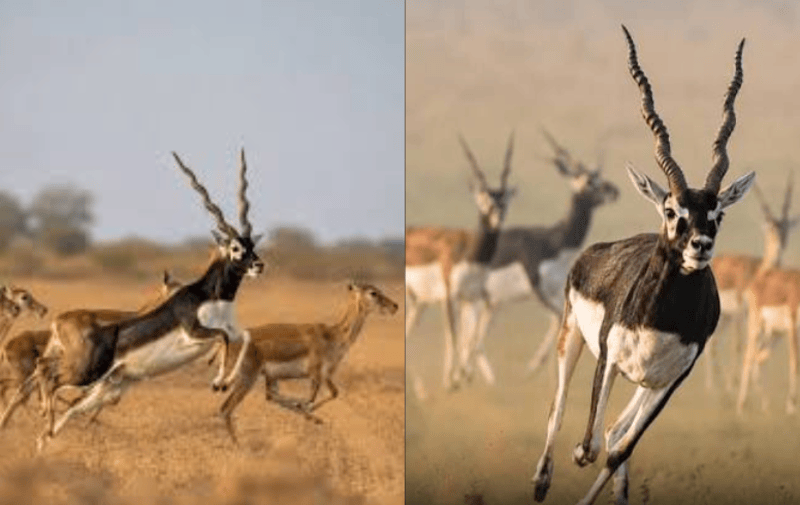
On August 15, the Gujarat Forest Department, with technical and logistical support from the Greens Zoological Rescue and Rehabilitation Centre (GZRRC), Vantara, released 20 blackbucks into the Banni Grasslands.
The group comprised five males and 15 females, transferred from Vantara’s wildlife rescue and rehabilitation facility in Jamnagar. The release was carried out after the required approvals from the Chief Wildlife Warden, Gujarat, and the Central Zoo Authority.
The move is being seen as an important step towards rebuilding Banni’s native herbivore population and restoring the ecological character of one of India’s most distinctive grassland landscapes.
Banni is much more than a sea of grass stretching across Kutch. It is a living ecosystem that supports pastoral communities and a diverse range of native wildlife.
Blackbuck, chinkara, nilgai and wild boar have historically formed part of the region’s herbivore community. Strengthening these populations can help rebuild natural food webs and predator-prey relationships, while contributing to a more resilient grassland ecosystem.
The blackbucks were moved only after veterinary examination, health screening, quarantine, disease surveillance and other prescribed safeguards. Specialised transportation and careful handling were also part of the exercise.
For conservationists, the goal extends beyond releasing animals into a new landscape. Successful species restoration requires understanding the habitat, population dynamics, health of individual animals and the role of local communities.
The Banni release is part of a wider programme to strengthen native herbivore populations across Gujarat. The Central Government, through the Ministry of Environment, Forest and Climate Change, has approved the translocation of 500 blackbucks and 100 chinkara, with the Chief Wildlife Warden, Gujarat, providing the necessary directions.
Some elements of this wider programme are linked to strengthening the prey base for the planned cheetah reintroduction programme. However, the Banni blackbuck release also has a separate conservation objective: restoring a species native to the grassland itself.
The Banni Grassland Forest Division has sought Vantara’s technical assistance for the broader translocation programme.
The 20 blackbucks began their journey at Vantara’s facility in Jamnagar before being transported to Banni for release. The initiative builds on earlier collaboration between the Gujarat Forest Department and Vantara. With approval from the Chief Wildlife Warden, Vantara has previously supported the rewilding of nearly 80 spotted deer in Barda Wildlife Sanctuary, aimed at strengthening biodiversity within the Asiatic lion conservation landscape.
For Banni, however, the arrival of these 20 blackbucks carries a distinct significance. They represent a small beginning, but potentially an important one.
As the animals settle into the grasslands, the larger ambition is clear: to bring back native wildlife, strengthen natural ecological relationships and help Banni thrive as a living grassland ecosystem once again.
.jpeg)
I have a Masters in Literature and a knack for spotting the silver lining! When I’m not chasing good news, you’ll find me nurturing my farm or lost in a good book.