"Dream, Dream, Dream! Conduct these dreams into thoughts, and then transform them into action."
- Dr. A. P. J. Abdul Kalam
"Dream, Dream, Dream! Conduct these dreams into thoughts, and then transform them into action."
- Dr. A. P. J. Abdul Kalam
10 May 2026
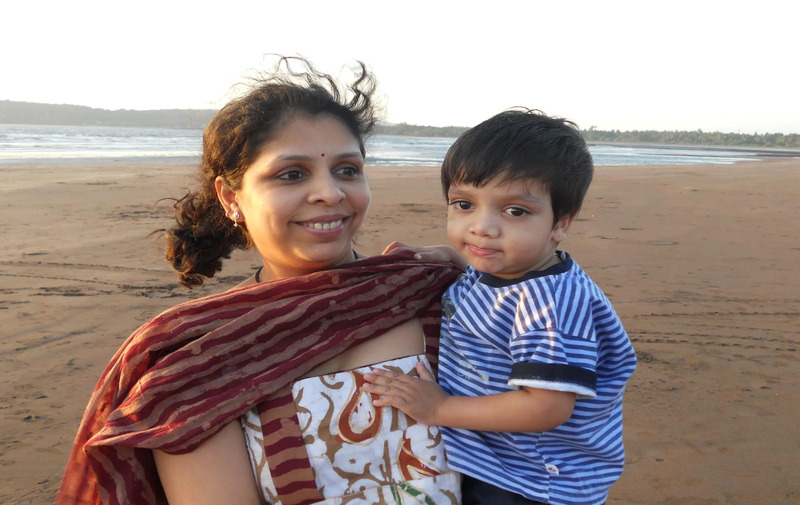
Motherhood is often described as unconditional love. But for Shital Bhatkar, motherhood became something even greater—resilience, courage, and a lifelong mission to ease the suffering of others.
This Mother’s Day, her story stands as a powerful reminder that a mother’s love does not end with loss. Sometimes, it becomes the reason countless others survive. Shital and her husband Vikrant Bhatkar lost their beloved son Aarya to Niemann Pick Type C, an extremely rare genetic storage disorder that affects nearly one in a million people. Globally, only around 500 cases have been recorded.
But instead of allowing grief to consume them, the couple transformed their heartbreak into hope. Today, through their organisation WithAarya, they support families battling life-threatening diseases, provide emotional guidance, arrange medicines and food, and ensure that no parent feels alone in the terrifying journey they once faced.
Shital once imagined a simple and happy life centred around family. After the birth of her daughter Prachiti, she left her banking career to focus entirely on motherhood. Years later, when she became pregnant again, she recalls feeling an unexplained fear.
“I had terrible nightmares about having an abnormal baby,” she remembered. When Aarya was born, he appeared perfectly healthy. But by the age of 18 months, Shital and Vikrant realised something was wrong. Unlike other toddlers, he struggled to stand or walk properly.
Doctors eventually diagnosed him with a storage disorder — a devastating condition in which the body cannot properly break down fats and cholesterol. Over time, these substances accumulate in organs and brain tissue, leading to progressive organ failure.
The diagnosis opened the door to years of uncertainty, painful treatments and emotional exhaustion.
Finding proper tests was itself a challenge. At one point, the family struggled to locate laboratories capable of diagnosing the disease in Mumbai. Aarya underwent multiple procedures, including skin extraction tests and surgery to help him swallow food.
Yet through every hospital visit and sleepless night, Shital refused to stop fighting for her son.
In 2011, the couple spent nearly Rs 5 lakh on imported medicines that could slow Aarya’s deterioration. “Though Aarya would not be cured, at least I wouldn’t lose my child,” Shital had hoped.
But as they navigated the world of rare diseases, the Bhatkars realised something heartbreaking—families like theirs were suffering in silence across India, with little awareness, guidance or support.
That realisation led to the birth of WithAarya. The organisation began while Aarya himself was still undergoing treatment. What started as a deeply personal mission soon became a lifeline for families from rural areas and underprivileged backgrounds struggling to access expensive medical tests and supportive care.
Doctors from across India began connecting patients with the organisation. “Supportive care is extremely difficult for families handling terminal disorders,” Vikrant explained. WithAarya stepped in where many systems failed.
While volunteering at hospitals, Shital noticed another painful reality. Families of patients often lived on pavements outside hospitals, unable to afford food or shelter while their loved ones underwent treatment.
That observation inspired Don Ghaas — meaning “two morsels” in Marathi — an initiative launched by WithAarya to provide affordable meals to families outside hospitals.
Today, volunteers distribute nearly 100 food packets daily outside Mumbai’s Tata, KEM and Wadia hospitals. Each packet contains chapatis, sabzi, khichdi and bananas.
Aarya passed away on February 20, 2015, just months before turning seven. But his story did not end there.
Every smile Shital sees in a hospital ward reminds her of her son. Every child helped through WithAarya carries a part of Aarya’s legacy forward.
This Mother’s Day, while many celebrate with flowers and gifts, Shital Bhatkar’s story reminds the world of another kind of motherhood—one that turns pain into purpose and grief into compassion.
In every food packet distributed, every struggling family guided and every sick child comforted, Aarya still lives on.
.jpeg)
I have a Masters in Literature and a knack for spotting the silver lining! When I’m not chasing good news, you’ll find me nurturing my farm or lost in a good book.