"Dream, Dream, Dream! Conduct these dreams into thoughts, and then transform them into action."
- Dr. A. P. J. Abdul Kalam
"Dream, Dream, Dream! Conduct these dreams into thoughts, and then transform them into action."
- Dr. A. P. J. Abdul Kalam
13 Jan 2026
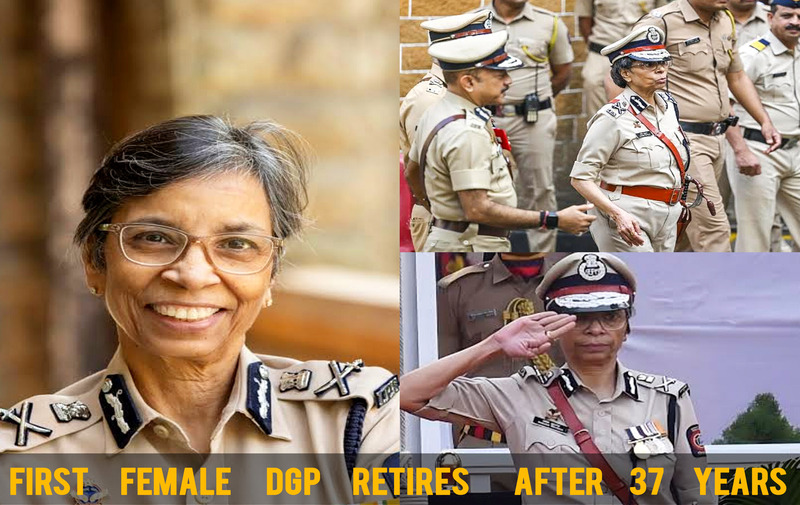
Rashmi Shukla’s journey in the Indian Police Service began in 1988, when she joined as part of a batch that entered a force overwhelmingly dominated by men, especially in leadership roles. Born on June 30, 1964, she steadily rose through the ranks at a time when women officers were still viewed as exceptions rather than equals. Over 37.5 years, she held some of Maharashtra’s most demanding postings, eventually becoming the first woman Director General of Police in the state’s history. Her retirement marks not only the end of a long career but also the conclusion of a chapter that took decades to write, one built on experience earned district by district, file by file and command by command.
Shukla’s career was shaped by roles that demanded discretion, strategic thinking, and resilience. She served as Pune Police Commissioner, overseeing law and order in one of Maharashtra’s fastest-growing urban centres. Later, she headed the State Intelligence Department, placing her at the nerve centre of internal security, political intelligence, and preventive policing. She also took on national responsibility, serving as Director General of the Sashastra Seema Bal (SSB), a central armed police force guarding India’s borders.
These roles were not ceremonial; they required operational command, intelligence coordination, and crisis management. Throughout her service, she was recognised with prestigious honours, including the President’s Police Medal for Meritorious Service.
No woman reaches the top of Indian policing without scrutiny and Shukla’s career was no exception. Her tenure, especially during her intelligence postings, placed her at the intersection of policing and politics, a space where decisions are rarely neutral and leadership is constantly tested. Allegations and controversies followed, drawing public attention and institutional pressure.
Yet, what stands out is not the turbulence, but her continuity; she remained in senior command roles, transitioned to central forces, and ultimately returned to lead Maharashtra Police as DGP. Her presence at the helm challenged an unspoken norm that women officers are easier to question, quicker to doubt, and slower to defend. That she endured this terrain for nearly four decades speaks to a resilience rarely acknowledged openly.
As Rashmi Shukla retires, she leaves behind more than a vacant office; she leaves a precedent. For women officers across Maharashtra, her career stands as proof that leadership is not limited to supportive or symbolic roles. She commanded intelligence wings, urban police forces, and border-guarding units, finally culminating in the highest post in state policing. Her retirement is deeply symbolic: it closes a pioneering era while reminding institutions how long it took for a woman to reach the top and how essential it is that she not be the last.
Rashmi Shukla steps away from uniformed service as a figure who altered perception quietly but decisively, leaving future generations of women officers with something invaluable: a visible path forward.

Writing about what truly matters, good news and stories to remind the world - it is brighter than we think.