"Dream, Dream, Dream! Conduct these dreams into thoughts, and then transform them into action."
- Dr. A. P. J. Abdul Kalam
"Dream, Dream, Dream! Conduct these dreams into thoughts, and then transform them into action."
- Dr. A. P. J. Abdul Kalam
14 Oct 2026
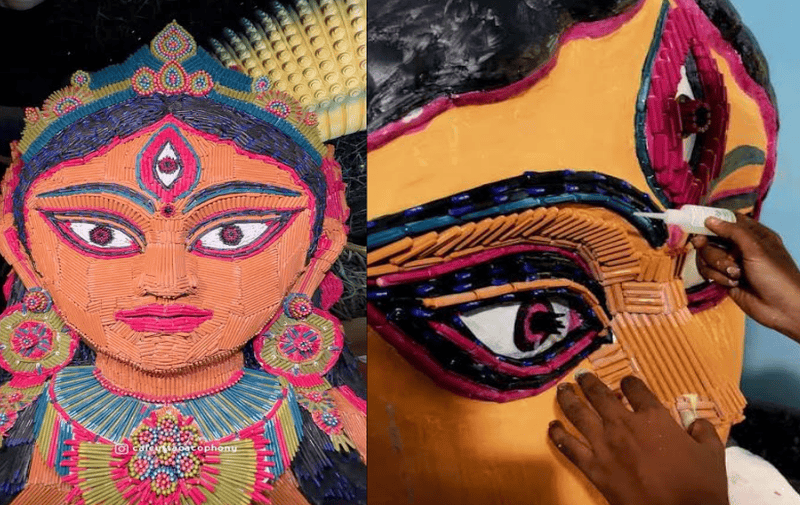
In Kolkata, thousands of discarded writing instruments have found a divine new purpose! A remarkable 5.5-foot sculpture of Maa Durga, created using approximately 13,000 pens and an equal number of refills, is drawing attention for its unique blend of art, devotion and sustainability.
Created by Kolkata-based artist Chandra Nath Saha, popularly known as Tilak, the installation is on display at Tridhara Sammilani in south Kolkata. Placed alongside the main Durga idol, this extraordinary creation shows how everyday objects can become something beautiful when imagination meets purpose.
Measuring approximately 5.5 feet in height, 4.5 feet in width and 3 feet in depth, the sculpture brings together thousands of individual writing instruments to form the familiar image of Goddess Durga.
The project presented an unusual challenge for Saha. Unlike conventional sculpting materials, pens are small, rigid objects that are not designed to create intricate figures. Each piece had to contribute to the larger structure while preserving the goddess's proportions and appearance. The face required particular care, as even the smallest details were important to retain her recognisable expression. The entire project reportedly took more than 20 days of planning and execution, with support from the Tridhara Sammilani team.
Speaking to The Statesman, Saha explained his interest in transforming a familiar, functional object into an artistic expression of Maa Durga. His creation demonstrates how an unconventional material can be used to celebrate one of India's most cherished festivals.
Durga Puja is known for its spectacular pandals, artistic installations and innovative themes. Every year, artists in Kolkata find new ways to bring traditional stories to life, making the festival a vibrant celebration of creativity and culture. This pen sculpture adds another meaningful dimension to that tradition by drawing attention to the possibilities of reusing materials that might otherwise be thrown away.
Its sustainability story also continues beyond the festivities. Unlike the main Durga idol, which traditionally undergoes immersion during Visarjan, the pen sculpture is intended to be dismantled after the celebrations. Its plastic components are planned to be recycled into new products, including pens.
The sculpture is more than an eye-catching festive installation. It offers a simple yet powerful reminder that materials we often overlook can have a second life.
By turning thousands of pens into a symbol of devotion, Saha has brought together artistic imagination and environmental awareness. His creation shows that sustainability need not be separate from culture and tradition. Sometimes, a little creativity is all it takes to transform everyday waste into something extraordinary.
.jpeg)
I have a Masters in Literature and a knack for spotting the silver lining! When I’m not chasing good news, you’ll find me nurturing my farm or lost in a good book.