"Dream, Dream, Dream! Conduct these dreams into thoughts, and then transform them into action."
- Dr. A. P. J. Abdul Kalam
"Dream, Dream, Dream! Conduct these dreams into thoughts, and then transform them into action."
- Dr. A. P. J. Abdul Kalam
10 Apr 2026
There are places where sound disappears, light fades, and only pressure remains, and it is exactly there that India created history on March 31, 2026. In the deep waters near Kavaratti Island, Lakshadweep, three civilian divers descended to a staggering 100 metres, marking what is now being recognised as one of the deepest civilian dives ever carried out in the country.
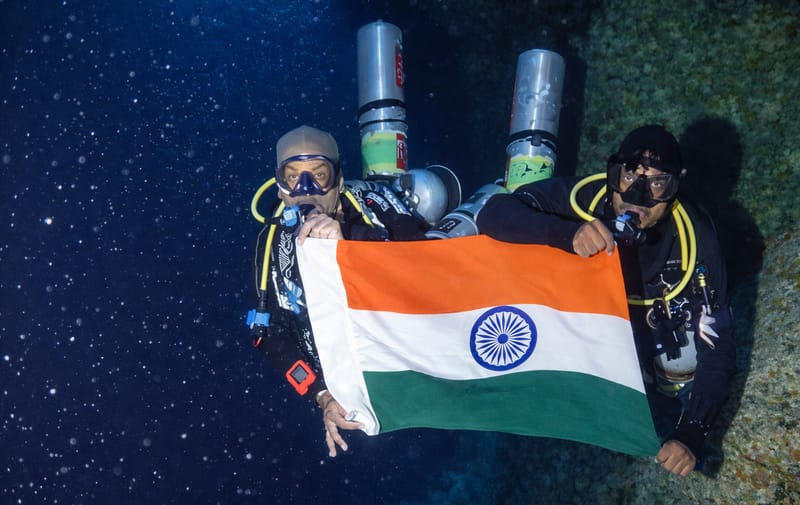
But this wasn’t just about depth. In that overwhelming silence, Donarun Das, Muktesh Maheshwari, and Rolan Mathias did something unforgettable: they unfurled the Indian flag underwater. No crowd, no applause, just three divers, the ocean, and a moment that quietly echoed pride. It wasn’t loud, but it was powerful enough to place India firmly on the map of extreme technical diving.
At the centre of this mission was Donarun Das, a highly respected Deep Trimix and Rebreather Instructor, known for navigating some of the most complex diving environments. Alongside him was Muktesh Maheshwari, a practicing lawyer whose journey into technical diving reflects years of dedication beyond his profession. Completing the team was Rolan Mathias, whose role was critical in maintaining coordination and precision during the dive.
What makes this trio stand out is not just what they achieved but who they are, individuals from different walks of life united by discipline, skill, and an obsession with pushing limits. Together, they represent a new face of India’s diving community, quietly growing, highly skilled, and ready to take on challenges that few dare to attempt.
A 100-meter dive is not just "deep"; it is dangerously complex. At that level, divers enter the world of deep trimix diving, where every breath is calculated and every second matters. The body is exposed to intense pressure, and risks like nitrogen narcosis, oxygen toxicity, and decompression sickness are very real.
To survive and succeed, the team had to rely on precise gas management, strict decompression stops, and flawless execution underwater. And then came the defining moment, planting the Indian flag at 100 metres, a feat believed to be the deepest civilian flag deployment in India. It wasn’t just symbolic; it was proof of control, confidence, and mastery in one of the harshest environments on Earth.
Planning, Support & Why Lakshadweep
Moments like these don’t happen spontaneously; they are built through meticulous planning and strong support systems. The team followed a detailed dive strategy that included backup gas supplies, carefully timed decompression schedules, and emergency preparedness at every stage. On the surface, Riyas Jalal and Sameer Aman ensured constant monitoring and coordination, acting as the team’s lifeline from above. The mission was further strengthened by Lak Scuba, which handled logistics, while CAKES India and Scubapro India provided high-quality equipment essential for such extreme conditions.
And then there’s Lakshadweep, not just a backdrop but a crucial part of the story. The waters around Kavaratti are known for their crystal-clear visibility, stable conditions, and rich marine life, making them ideal for advanced diving. While access remains controlled, this achievement highlights its potential as a global-level diving destination. More importantly, it sends a clear message: India now has the skill, the support, and the spirit to compete in the deepest arenas of adventure sport.

Writing about what truly matters, good news and stories to remind the world - it is brighter than we think.